Marshall Islands issues Universal Basic Income with Crypto Payment option.

Crypto journalist
We are there

Crypto journalist
We are there

Share

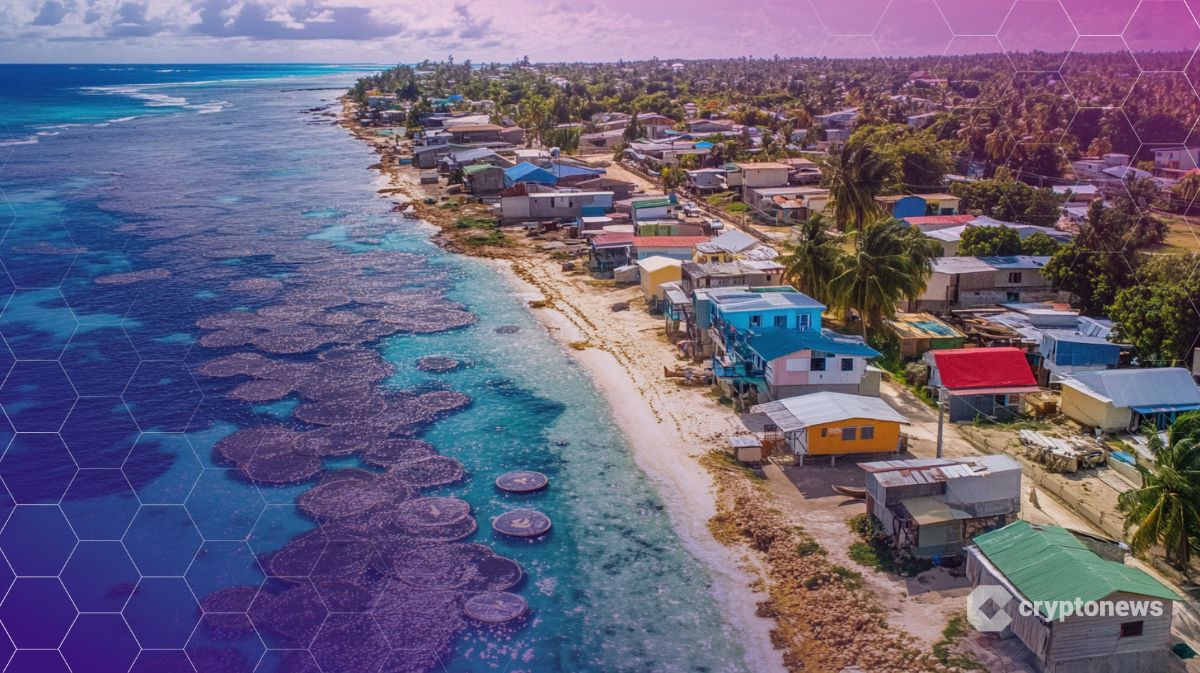
The Marshall Islands has launched a nationwide Universal Basic Income (UBI) program that allows citizens to receive cryptocurrency payments.
Key Takeaways:
Marshall Islands UBI launches with crypto and traditional payment options.
Payments aim to promote inclusion without replacing jobs.
Most recipients still prefer bank checks or checks over digital wallets.
Each resident citizen is entitled to a stipend of around $200 per quarter, or about $800 per year, as the government seeks to offset the rising cost of living and slow out-migration, according to The Guardian.
The first payments were distributed in late November, and recipients were given the option of receiving funds via bank deposit, paper checks or a government-backed digital wallet that offers payments on the blockchain.
The Marshall Islands says UBI aims to promote inclusion, not replace work.
Finance Minister David Paul said the plan was designed to ensure greater inclusion rather than replacing working income.
“We the government want to make sure that no one is left behind,” Paul told the Guardian, adding that the payments are intended as a social safety net and not a replacement for work, but a morale boost.
The Pacific nation of the Marshall Islands, home to about 42,000 people between Hawaii and Australia, faces unique economic and geographic challenges.
Many communities are spread across remote atolls, complicating the provision of public services and funding. Officials say the cryptocurrency option was introduced to help overcome those logistical hurdles.
The program is funded by a trust established under a long-term agreement with the United States, in part to compensate the Marshall Islands for decades of US nuclear testing.
The fund has more than $1.3 billion in assets, with Washington pledging to contribute an additional $500 million through 2027.
Dr Hui Pham, associate professor and crypto-fintech leader at RMIT University, said the initiative represented a global first.
“This is the world's first national roll-out of the UBI program,” he said, noting that the use of blockchain technology at a national level is extremely unusual.
Crypto payments are made using a US dollar-pegged stablecoin, which officials say allows for quick and transparent transactions across hundreds of islands.
Still, take-up of the digital option is limited. According to the Marshall Islands Social Security Administration, about 60% of initial payments are made through bank deposits, with most of the remainder issued as checks.
So far, only about a dozen people have opted to accept UBI with their digital wallet.
Sam Altman's world wants to create a global UBI mechanism
Sam Altman's World, originally launched as WorldCoin, also posits a blockchain initiative as a path to a global UBI mechanism.
The main idea of the project is to verify the unique human identity of each person using biometric scans. The “Orb” tool creates an in-world ID that verifies the user is genuine and non-boto, allowing for a fair distribution of native WLD.
Verified users receive WLD allocations, which they see as a form of UBI within the network, which aims to expand financial inclusion and economic participation worldwide.
WorldChain released Ethereum's Layer-2 blockchain last year. The network serves its 15 million verified users with a “World ID” obtained through an iris scan.
Trending news, recommended popular crypto topics, price predictions