Overnight markets crashed—gold bounced back, bitcoin didn’t
Bitcoin fell more than 5% from $89,000 to $83,400 in early Friday trading Asian time. Unlike gold and stocks, it has failed to recover – exposing the so-called “digital gold” to a serious identity crisis.
The market is re-valuing trust in currencies and institutions, but that trust is flowing into gold vaults, not crypto wallets.
Sponsored

Same wave, different results
The sell-off was triggered by an escalation in tensions between the US and Iran after President Trump issued a warning on Truth Social threatening military strikes unless Tehran agreed to a nuclear deal. Middle Eastern governments are trying to push both sides into talks, but efforts are failing as the United States moves more firepower into the region. The looming government shutdown has heightened the sense of vulnerability.
Gold responded with high volatility, falling 7% to $5,250 in one hour before making a spectacular V-shaped recovery. Kobe's letter stated that during one period the market value of gold was recorded at 5.5 trillion dollars. This is the largest daily activity in history. In early Asian trade on Friday, spot gold was back above $5,400, up 1 percent.
US stocks, meanwhile, showed resilience. The Nasdaq shed just 0.7%, with Microsoft sinking 10% on AI spending concerns. But the Meta rose 10% on strong earnings, and the Dow closed marginally positive.
Bitcoin told a different story. It dropped to $83,400 and quickly rose to $84,200, well below gold's V-shaped recovery or tech pick rally.
Sponsored
The difference is stark. Gold is up more than 25 percent this month alone since Trump's second term began a year ago. Since April's “Independence Day” tariffs, silver has risen below $30 to $118 an ounce. Some analysts describe price movements as parabolic, with all the hallmarks of speculative mania.
Analysts say the rally in precious metals reflects more than short-term anxiety — it reflects an erosion of confidence in money, institutions and the post-Cold War economic system.
Trump's aggressive policies—punitive tariffs, threats against Greenland and Iran, and increasing pressure on the Federal Reserve, including the impeachment of Chairman Jerome Powell—have sent investors into traditional safe havens. A basket of dollar currencies fell to a four-year low on Wednesday.
Central banks have been adding to their gold holdings, creating some diversification away from US Treasuries. Retail investors are also piling in, drawn by both the safe narrative and the easy pace.
Sponsored
Underlying structural weakness
However, bitcoin, which shares gold's theoretical appeal as a hedge against a currency crash, has not joined the buying spree.
The price action exposed the vulnerabilities that had been building in the crypto markets. Bitcoin spot ETFs saw steady inflows in January, with total assets falling from a peak of $169 billion in October to $114 billion – a 32% decline.
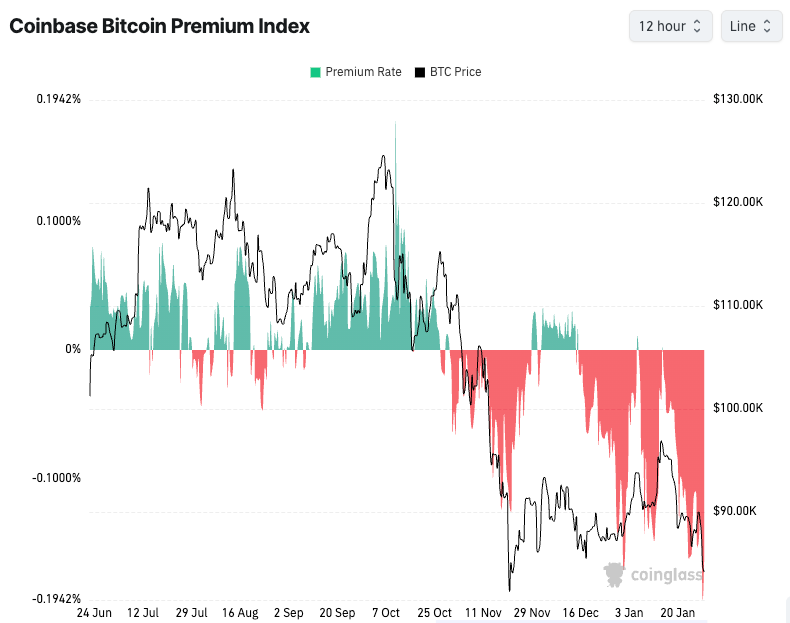
The Coinbase Premium Index, which tracks the price differential between Coinbase and global exchanges and serves as a barometer for US institutional interest, also turned negative. Both indicators point to waning appetite among institutional buyers, who drove the 2024-2025 rally.
According to data from the chain, retail demand has fallen sharply. As both institutional and retail buyers pull back, losses become more violent as rallies struggle to maintain momentum.
Sponsored
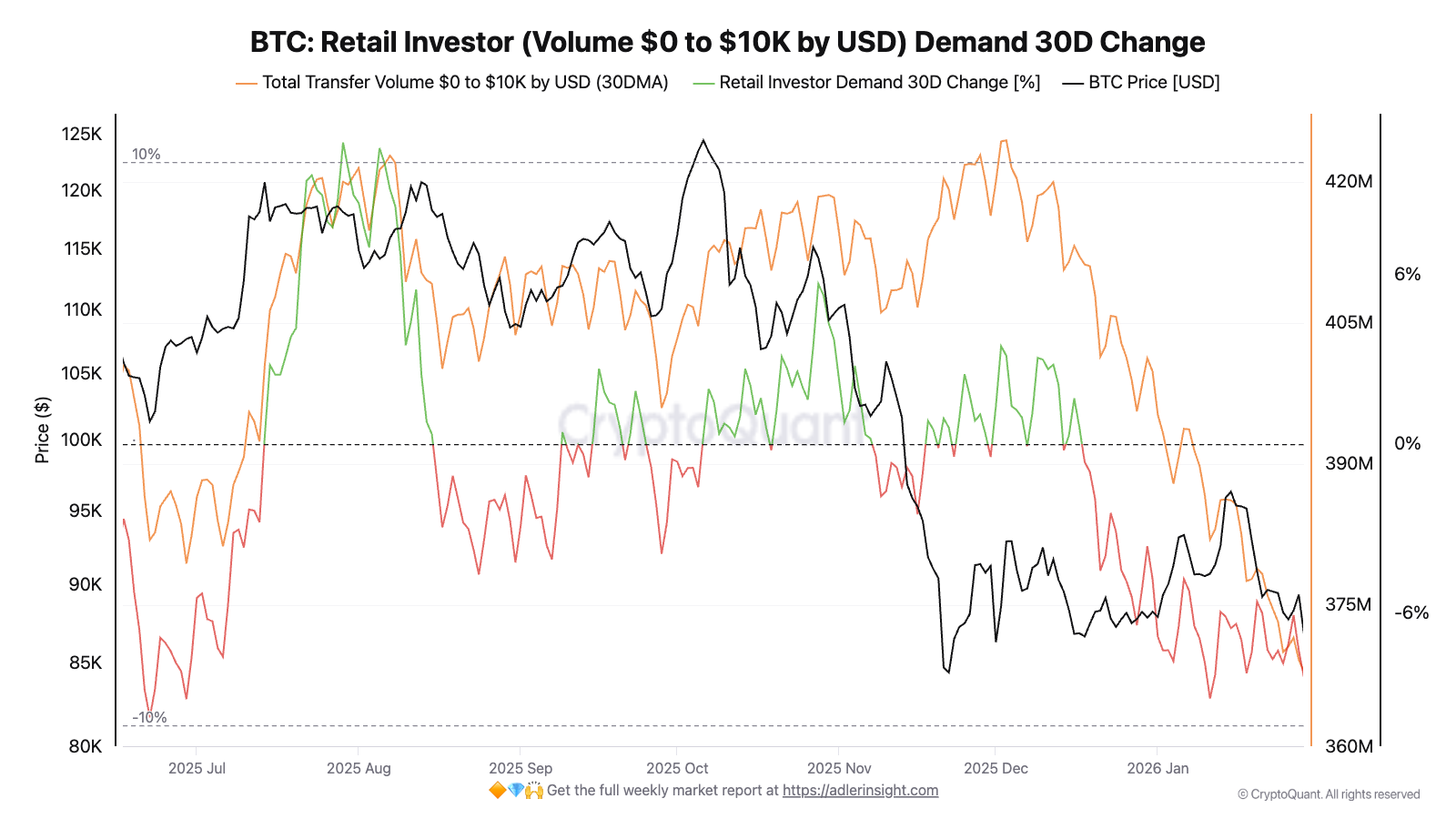
On the retail side, on-chain data from CryptoQuant showed small transactions between $0 and $10,000 gradually declining, with 30-day demand growth dropping to -6% from over 10% in October.
As both institutional and retail demand weaken, tensions will become more violent as rallies struggle to maintain momentum.
what do you mean?
Wednesday's session featured a real-time stress test. Gold has proven to be the choice of choice in the market crisis. Tech stocks have shown that strong fundamentals can override macro fears. Bitcoin did neither – absorbing the downside of risk assets while losing out on safe havens.
In order for the “digital gold” narrative to regain credibility, Bitcoin must behave in a secure manner when it matters most. Until then, the label remains more aspirational than reality.