Rising JGB production and tariff tensions will push Bitcoin into defensive mode, the analyst says.

Crypto journalist
Anas Hasan

Crypto journalist


Share

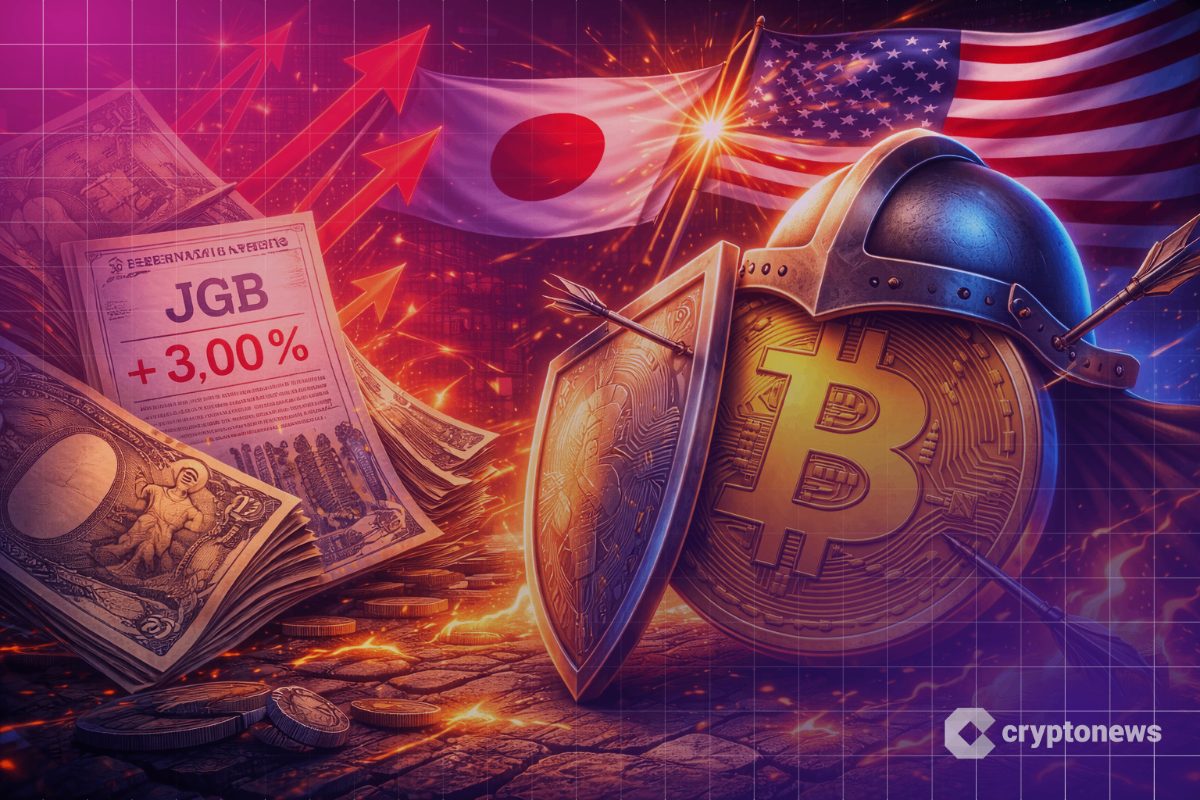
Bitcoin and global markets turned defensive after a major jitter in Japan's bond market and fresh geopolitical tensions, with US stocks falling more than 2% last week and global debt markets selling off, sending BTC down more than 6%.
According to a recent market insight from QCP Asia, the pullback was attributed to the Japanese government increasing bond yields and escalating US-European trade tensions, which analysts say are tightening financial conditions and eroding appetite in the asset class.
On this development, Bitcoin has struggled to recover quickly after recently hitting $97,000, trading below $90,000.
The Japanese bond market is experiencing historic stress.
At the heart of the turmoil is a historic shift in Japan's interest rate environment after decades of near-zero yields.
The yield on ten-year Japanese government bonds rose to 2.29 percent, the highest level since 1999, as investors grew accustomed to Japan's role as an anchor of global financial stability.
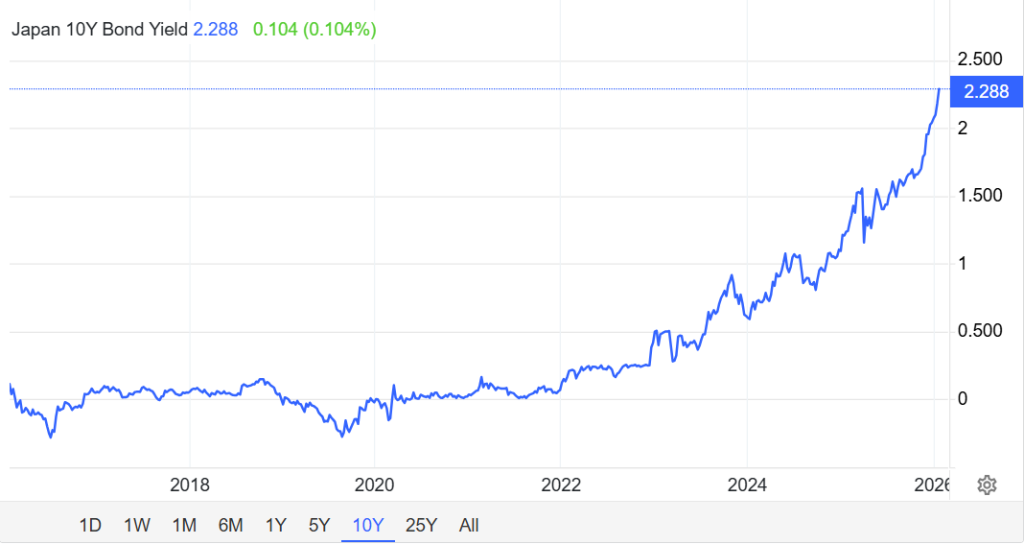
The move exposed deep fiscal vulnerabilities, with government debt at more than 240% of GDP and total liabilities of nearly ¥1,342 trillion.
Debt service in 2010 It is projected to account for a quarter of Japan's fiscal spending by 2026, bolstering research on long-term sustainability as borrowing costs rise.
“The sustainability of Japan's public finances is clearly being called into question as output continues to rise, and the outflows in international bonds will emphasize Japan as a key volatile asset,” said a QCP Asia analyst.
JGB production increases, yen pressure and policy fears
After decades of low inflation, Japan is struggling with persistent inflationary pressures that have made fixed payments on long-term bonds less attractive.
As investors sold at a discount, yields rose, underpinning higher borrowing costs for mortgages, corporate loans and property valuations.
Institutional flows show the pressure, with Japanese insurers selling $5.2 billion of bonds over ten years in December alone.
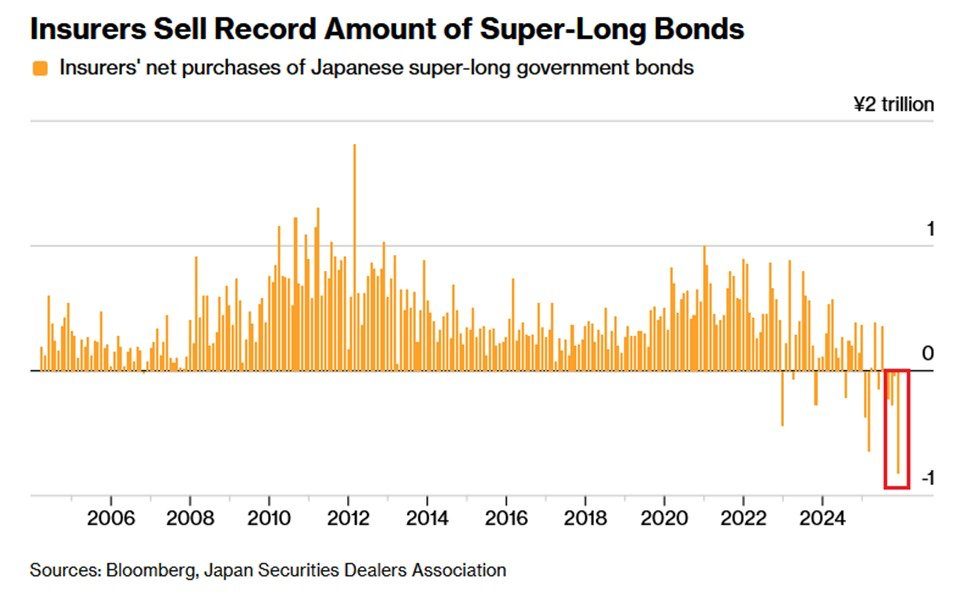
That was the fifth consecutive monthly selloff and the largest since data collection began in 2004, bringing total net sales to $8.7 billion.
Interest signals have also weakened, with Japan's latest 20-year bond offering bid-to-cover at 3.19, down from 4.1 previously and below its 12-month average.
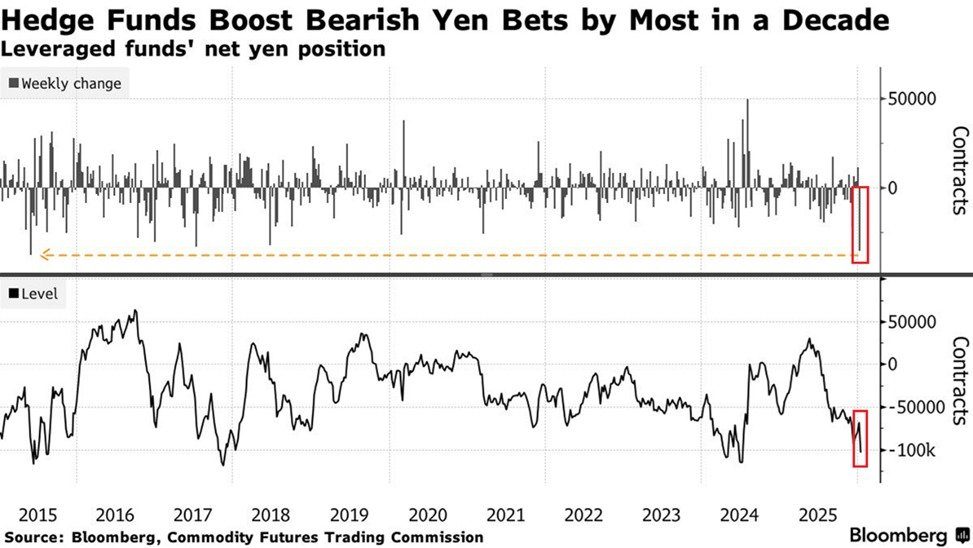
Meanwhile, hedge funds stepped up their bearish yen bets and lifted short positions by 35,624 contracts in the week ending Jan. 13, the biggest weekly jump since May 2015.
The rate hike sees Bitcoin trading as a high-beta risk asset
Beyond Japan, geopolitical tensions have flared up, with trade relations between the US and Europe further strained.
President Trump has imposed a 10% tariff on eight European countries that oppose US control of Greenland, which will take effect on February 1 and rise to 25% by June.
Europe quickly retaliated, jeopardizing transatlantic trade, worth an estimated $650 to $700 billion in bilateral goods.
The European Parliament is weighing a suspension of approval for the US-EU trade deal reached in July, a move that would mark significant progress.

Source: Stephanie Lecoq/AP
“With retaliatory measures on both sides, the market's question is not whether tensions will rise, but how far they will go,” a QCP analyst said, adding that this is “another round of TACO” or a policy path markets can't ignore.
US Treasury Secretary Scott Bessant added that the latest market decline was caused by a “six-point swing” in the Japanese bond market, which he called an “all Japanese bond crash”.
As liquidity continues to tighten and volatility increases, crypto analyst CryptoMich said BTC could continue to slide lower until it breaks out of the Japanese clear, warning that $86,000 is a key support to hold to prevent a deeper slide to $80,000.
Trending news, recommended popular crypto topics, price predictions