Russia limits crypto buyers to $4,000 per year

Crypto journalist
Anas Hasan

Crypto journalist


Share

Russia's State Duma plans to finalize legislation by July 1, 2026, establishing a two-tier crypto access system that will cover unqualified investors with a fee of 300,000 rubles ($4,000).
The framework, based on the Bank of Russia's December concept submitted to the government, sees digital currencies and stablecoins as currencies, barring their ban on domestic payments.
Non-qualified investors face strict limits on annual capital gains; From July 1, 2027, they will have to pass mandatory tests and limit purchases to approved liquid cryptocurrencies, reflecting penalties for illegal brokerage activities and sanctions against illegal banking.
Eligible investors face no volume restrictions, but must attempt to demonstrate risk awareness and cannot access anonymous tokens that hide transaction recipients.
Approved details and privacy coin exclusions
According to Aleksandra Fedotova, a lawyer at Whitestone, the central bank could develop an approved list of cryptocurrencies that would show the 5-10 most traded assets on major exchanges.
“These definitely include BTC and ETH. Considering their popularity in our country, they can add SOL or TON,” Fedotova explained in an interview with Parliamentskaya newspaper.
Privacy-focused cryptocurrencies should be excluded from regulated markets, regardless of investor qualifications.
“The central bank clearly says: You cannot buy coins that hide the intended recipients,” Fedotova said.
“For example, Monero (XMR), Zcash (ZEC) and Dash. After all, if you can't make a transaction graph and see where the money is coming from, this asset will not pass AML (Anti-Money Laundering) checks.”
Despite domestic restrictions, Russian residents are allowed to buy cryptocurrencies on foreign platforms using foreign accounts and transfer their previously acquired assets abroad through Russian intermediaries.
However, such transactions require the notification of the tax service, which extend crypto participation beyond the borders of Russia while maintaining regulatory control.
Infrastructure readiness meets constant payment constraints.
Crypto exchanges, brokers, and custodians use existing licenses, so crypto transactions operate within existing licensed infrastructure, while specialized depositories and exchangers face new regulatory requirements.
Moscow Exchange and St. Petersburg Exchange have confirmed that they are ready to start crypto trading after the legislative framework is activated in mid-2026.
Exchanges require licensing under the new framework, turning previously unregulated operations into illegal operations without proper authorization.
The regulatory framework aims to protect investors through institutional oversight while recognizing ongoing risks.
“However, despite this restriction, there is nothing that prevents users from buying these cryptocurrencies in foreign currency, as everyone is doing now,” said Fedotova.
But in this case they bear all the risks. They are protected by working within the set rules. “
The central bank continues to categorize cryptocurrencies as high-risk instruments (unissued and not guaranteed by any authority, subject to increased volatility and sanctions risks), allowing investors to estimate potential losses when entering the crypto market.
The implementation period follows the growing economic integration
The State Duma has begun drafting a legal framework that outlines rules for the creation, mining and circulation of cryptocurrencies alongside insider payment bans.
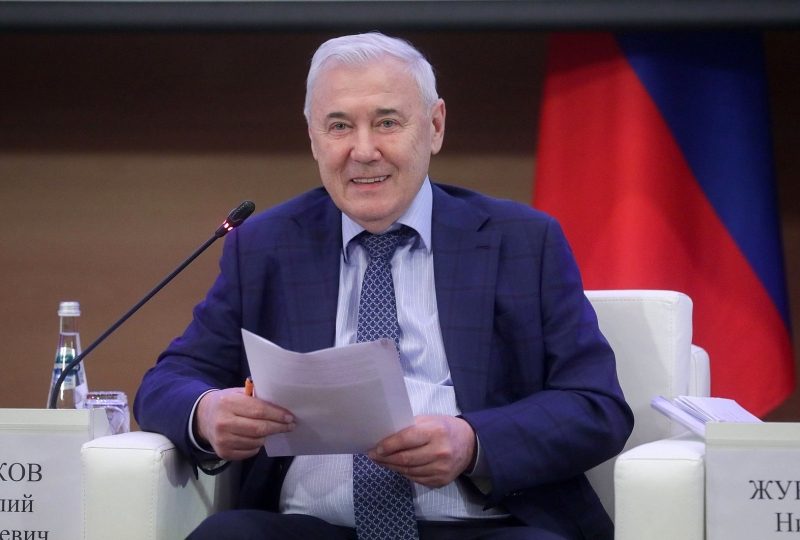
Aksakov stated that the first reading of the bill could happen next month, which could be resolved by a separate law on administrative, financial and criminal liability for illegal market activity.
The annual limit of 300,000 rubles for non-qualified investors will be adjusted during parliamentary discussions.
“Nequals works only to a certain extent, currently the figure of 300,000 rubles is being discussed. But maybe the amount will change during the discussions,” Aksakov pointed out.
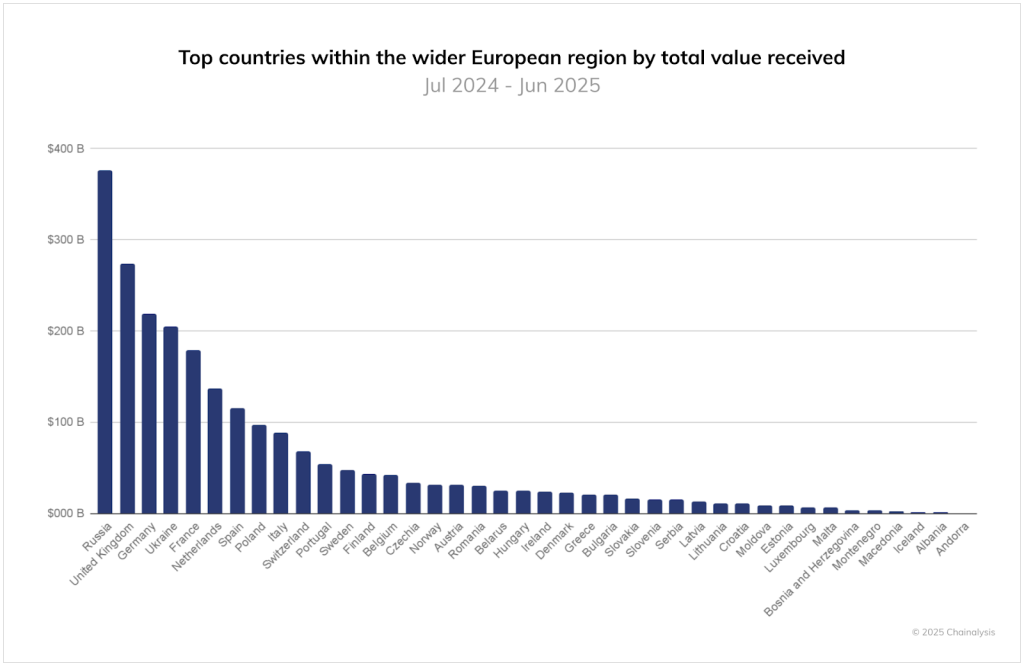
The regulatory push has seen Russia emerge as Europe's largest crypto market by transaction volume, surpassing the UK's $273.2 billion, with $376.3 billion between July 2024 and June 2025, according to Chinalysis data.
Russian crypto adoption goes beyond commercial speculation to mining operations that account for more than 16% of global hashrate and generate approximately 1 billion rubles daily.
Recently, a senior Kremlin official, Maxim Orshkin, argued that crypto mining should be classified as an export activity even if there is no physical cross-border movement.
The Constitutional Court's ruling on January 20, 2026, resolved legal problems, as courts had previously denied protection to rights to digital currencies, a position Fedotova called unfounded.
Trending news, recommended popular crypto topics, price predictions