US Liquidation Causes Crash in $250B Crypto Market

Journalist
Hassan Shitu

Journalist


Share


A heavy selloff that wiped nearly $250 billion off the cryptocurrency market over the weekend reignited speculation that digital assets are in structural decline or reacting to macro concerns.
Although all prices in the industry have fallen sharply, market analysts attribute the decline in US liquidity, not the collapse of the crypto markets.
Raoul Pal, founder and CEO of Global Macro Investor, said the US dollar liquidity shortage is temporarily triggered by a series of macro events such as repeated government shutdowns, volatility in Treasury funds management and risk capital gaps.
Bitcoin's drop mirrors that of tech stocks as liquidity tightens, Pal says
In a post published on X over the weekend, Pal rejected claims that bitcoin and crypto are “broken” or isolated from traditional markets, arguing instead that similar pressures are being seen in other long-term assets.
Pal cited similarities between Bitcoin and U.S. software-as-a-service stocks, saying the two asset classes have been almost identical during periods of price declines.
He said this points to a common macro driver rather than sector-specific weakness.
In his analysis, US aggregate liquidity has been a major factor in this cycle, which typically correlates more closely with crypto prices than global liquidity measures.
The liquidity squeeze, Pal said, stems from a combination of factors that have reduced the amount of capital circulating in the financial system.
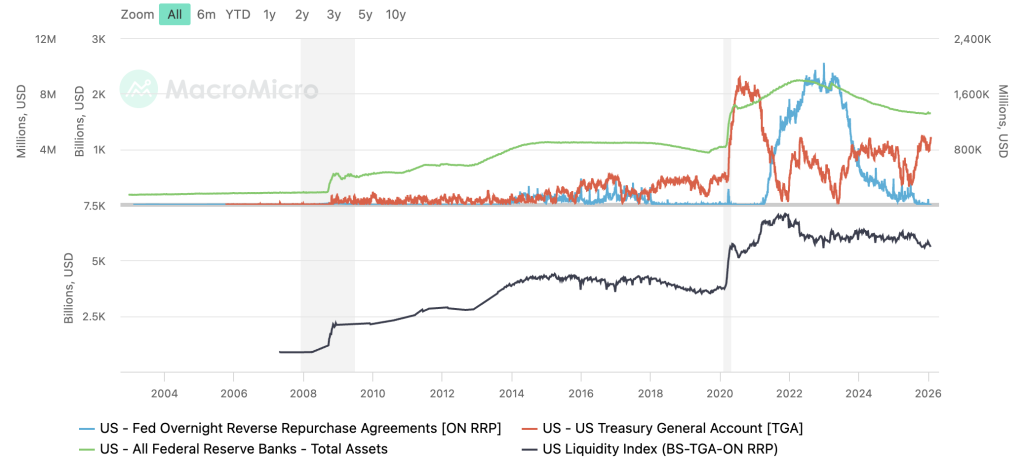
These are They are the result of the termination of the Federal Reserve Repo Facility in 2024, the rebuilding of the Treasury's balance sheet in mid-2025, and the recent partial shutdown of the US government.
In addition, the strong rise in gold has prevented marginal liquidity that could have been channeled into less risky assets such as crypto and high-growth stocks.
Market data indicated the extent of the damage, with bitcoin down more than 10% from a weekend high of $76,000 near $84,000 to form the largest CME futures gap in history.
Bitcoin and Ethereum are at 9-month lows as derivatives.
At the time of writing, Bitcoin was trading at $76,839, which is a 12.6% drop from last week and 39% below its all-time low. Ethereum suffered further losses, falling 7% in 24 hours to about 2243 and still more than 54% below its peak.
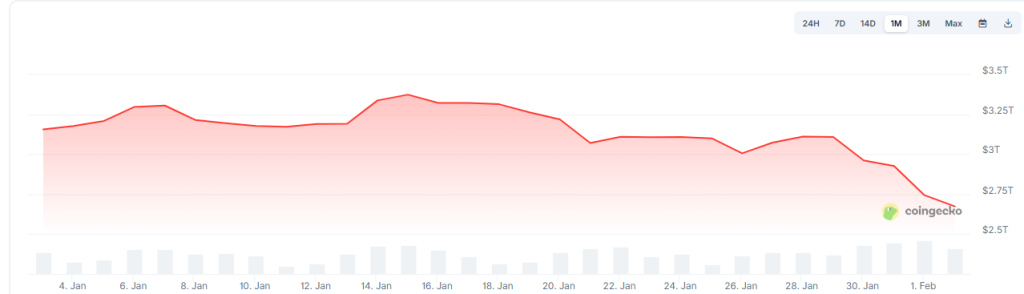
The crypto market in general is showing the same trend, the total market capitalization has dropped to about 2.66 trillion dollars, which was previously about 3 trillion dollars a week ago.
Liquidations were swift, and more than $2.5 billion was cleared in one day, with more than $5.4 billion flowing since Thursday, CoinGlass data shows.
Total demand across all derivatives markets fell to $24.2 billion, the lowest point in nine months, as reserves were dropped.
The sell-off over the weekend came from dystrophic liquidity and a series of macro news such as trade tensions, raising yields on long-term Japanese government bonds and rising geopolitical concerns in the Middle East and Asia.
Indicators on the chain suggest that self-confidence is weak. After the sale, the exchange's flow decreased significantly, which showed limited deep buying, and large bitcoin holders reduced their exposure to an estimated 10,000 BTC since early February.
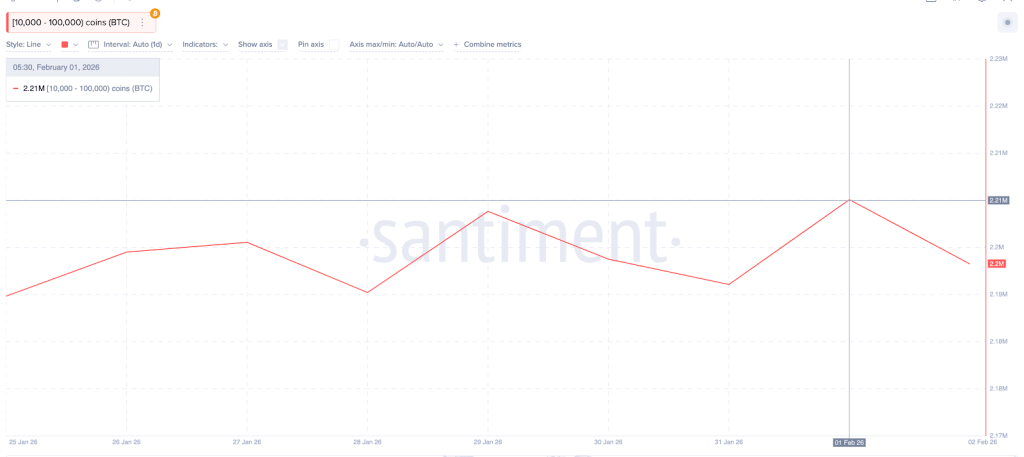
While short-term holders are deep in undisclosed losses, NUPL's benchmarks remain in capital territory, although not at levels historically associated with recent market bottoms.
Analysts note that without strong holdings from long-term investors, such rallies will fade.
Trending news, recommended popular crypto topics, price predictions