Venezuelan man faces 20 years in $1B cryptocurrency fraud scheme

Crypto journalist
Anas Hasan

Crypto journalist


Share


Federal prosecutors have charged a Venezuelan national with laundering nearly $1 billion through crypto wallets and shell companies in what they say is one of the largest money laundering operations ever prosecuted by the Justice Department.
Jorge Figueroa, 59, faces up to 20 years in prison if convicted of money-laundering, which authorities say is part of a network that laundered funds on several continents and deliberately concealed transactions from law enforcement.
The complaint, filed in the Eastern District of Virginia, accuses Figueira of running a sophisticated fraud device that converted money to cryptocurrency, passed digital assets through multiple wallets, then converted them into dollars, before transferring the money to high-risk recipients in Colombia, China, Panama and Mexico.
Between 2018 and the present, more than $1 billion has moved through separate crypto wallets and financial accounts, with most of the proceeds originating from crypto trading platforms, prosecutors said.
A billion-dollar network operating in many jurisdictions
Court documents show Figueira enlisted subordinates to execute hundreds of transfers designed to obscure the origin and destination of funds.
The operation focused on various bank accounts, cryptocurrency exchange accounts, private digital wallets and shell companies to move large amounts of illicit funds into and out of the United States, federal investigators said.
Reid Davis, special agent in charge of the FBI's Washington field office's criminal division, said the bureau identified nearly $1 billion in crypto passing through wallets used by Figueira's laundry business.
The network is said to have served individuals and businesses around the world making numerous transfers intended to hide the nature of funds and facilitate criminal activities in various countries.
U.S. Attorney Lindsey Halligan emphasized the scale of the alleged crime, saying, “Money laundering at this level allows transnational criminal organizations to operate, expand and cause harm in the real world.”
“People who move illegal funds in the billions must expect to be identified, disrupted and held fully accountable under federal law,” she warned.
The federal crackdown extends to several crypto-criminal networks
The charges against Figueras come amid heightened federal enforcement targeting crypto-related money laundering nationwide.
Indeed, earlier this week Manhattan District Attorney Alvin Bragg urged New York lawmakers to criminalize unlicensed crypto operations as a “$51 billion criminal economy.”
Federal data shows that crime is crypto-enabled, and in 2024, the FBI reported nearly 11,000 ATM-related complaints totaling more than $246 million.
Separately, blockchain analytics firm Chainalysis found that illegal crypto addresses will earn a record $154 billion by 2025, a significant increase compared to previous years.
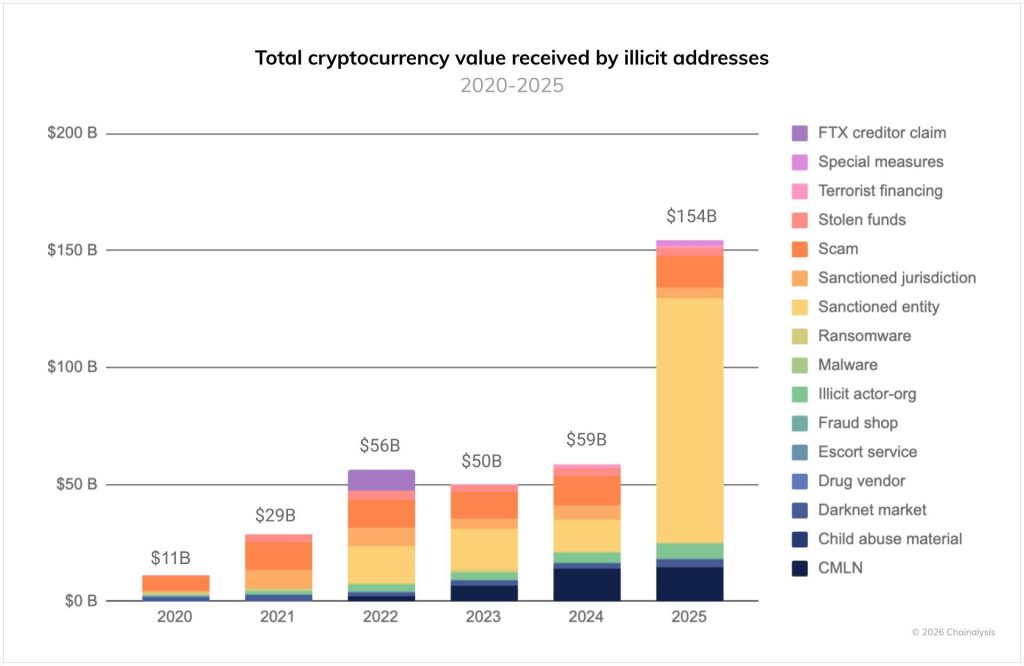
Recent indictments have targeted activities across the criminal spectrum.
On Thursday, Brian Gary Sewell of Utah was sentenced to three years in prison for masterminding a $2.9 million fraud scheme while simultaneously running an unauthorized currency-to-crypto trade that turned more than $5.4 million into wholesale cash.
Last month, prosecutors accused another 23-year-old Brooklyn resident, Ronald Spector, of stealing roughly $16 million from 100 Coinbase users, using phishing schemes based more on terror tactics than technical hacks.
As all these massive seizures escalated, the government moved to establish a strategic bitcoin reserve, keeping the seized crypto instead of auctioning it off.
This was one of the first things Donald Trump did when he took office, even signing an executive order to support it.
Recently, things took a different turn when it was revealed that the US Department of Justice had sold 57 bitcoins that had been canceled by the developers of the Zamora wallet.
However, White House crypto advisor Patrick Witt confirmed on Friday that the bitcoin lost in the case has not been canceled and will remain part of the executive's reserve, with federal holdings currently estimated at 328,372 BTC, worth more than $31 billion.
For now, the criminal complaint is just an allegation, and Figueira is presumed innocent until proven guilty. Assistant U.S. Attorney Catherine Rosenberg is prosecuting the case, sentencing guidelines and legal factors to consider if convicted.
Trending news, recommended popular crypto topics, price predictions