Vitalik claims that Ethereum has solved Crypto’s biggest problem.

Crypto journalist
Anas Hasan

Crypto journalist


Share

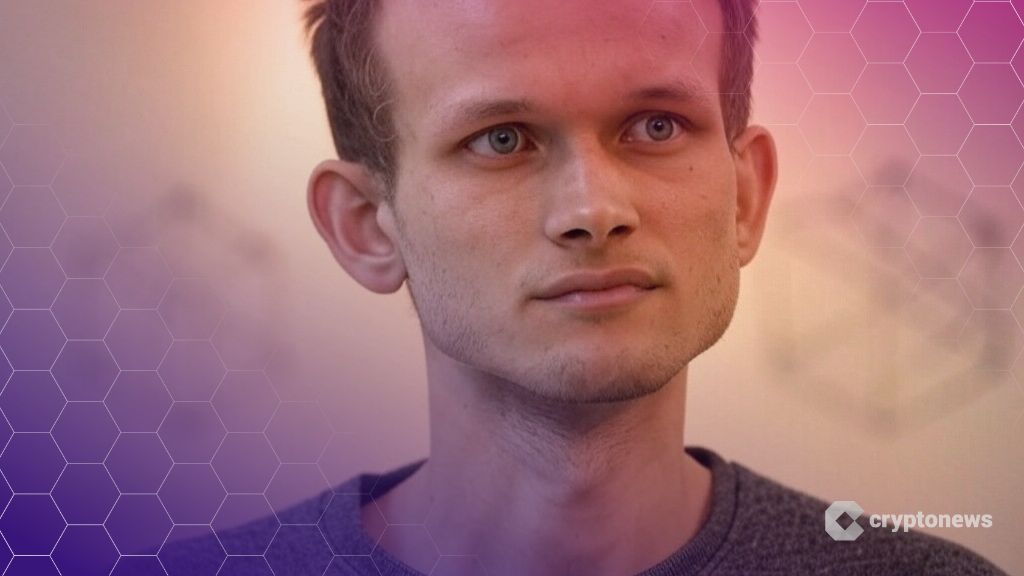
Ethereum founder Vitalik Buterin's network finally cracked the blockchain's fundamental trilemma through a combination of zero-knowledge Ethereum virtual machines and PerDAS technology running on the mainnet.
In the year It is the culmination of a ten-year technical journey that began in 2015 with Buterin's first data delivery sample and the development of ZKEVM in early 2020.
“These aren't minor improvements; they're turning Ethereum into a fundamentally new and more powerful decentralized network,” Buterin said in a post on X, explaining how the protocol now offers decentralization, consensus, and high-bandwidth simultaneously that were previously thought impossible.
Technical Milestones Change Blockchain Architecture.
Buterin explained that while early peer-to-peer networks faced severe limitations, Bittor had large bandwidth and decentralized but no consensus mechanism.
At the same time, Bitcoin is decentralized and consensus is achieved at a much lower cost due to the fact that it is duplicated rather than distributed.
Ethereum's new architecture breaks this pattern by distributing computations across nodes while maintaining cryptographic proof of all state transitions.
ZKEVMs achieve production-quality performance, with validation time dropping from 16 minutes to 16 seconds and cost dropping by a factor of 45, with 99% of Ethereum blocks now viewed on target hardware in less than 10 seconds.
Meanwhile, PeerDAS allows nodes to ensure data availability by sampling small chunks instead of downloading entire blocks, greatly scaling without paying for decentralization.
The Ethereum Foundation has set out a security-first roadmap that requires teams to achieve 128-bit proven security by the end of 2026, intermediate steps with 100-bit security in May 2026, and integration with VoiceCall's security estimation tool in February.
“If an attacker creates evidence, they can spoof anything: mint tokens from nothing, rewstate, steal money,” the foundation warned in December, adding that performance breakthroughs cannot compromise cryptographic integrity.
George Kadianakis of the foundation's cryptography team stressed the importance of protecting architecture before they become moving targets.
“Once teams reach these targets and the zkVM architecture stabilizes, the standard verification work we've invested in can reach its full potential,” he wrote, noting that recent compact polynomial commitment schemes like WHIR and techniques like JaggedPCS can now achieve targeted security targets.
The emission timeline extends to 2030
Buterin outlined a four-year deployment schedule starting in 2026 with ZKEVM independent gas cap increases.
Between 2026 and 2028, developers will implement gas substitution, state structure changes, and shifting enforcement burdens to blobs to reliably support higher volumes of output.
In the year By 2027 to 2030, Buterin expects that ZKEVM verification will become the primary block verification method as gas constraints increase significantly beyond current capacity.
The roadmap also includes distributed block building as a third critical component. Buterin describes it as a “long-term ideal holy grail” in which entire blocks are never congregated in one place, reducing risks of centralized interference and improving geographic equity.
While celebrating technical progress, Buterin warned in a separate January 1st post that Ethereum should resist the urge to chase “fun trends” such as “dollars or political memecoins.”
“Ethereum needs to do more to achieve its goals,” he wrote, calling for apps that pass the “footpath test” to continue operating despite the loss of original developers and external disruptions, hypothetical scenarios like Cloudflare being attacked by state actors.
The co-founder warned separately last month that the complexity of the protocol would limit the number of people who could understand the system end-to-end and undermine trust.
“If only five people can understand how your privacy protocol works, you haven't gained trust, you've only changed what you believe,” privacy network INTMAX said, echoing Buterin's growing technical consensus that it could strengthen regulatory oversight among experts.
Institutional adoption continues to accelerate despite these architectural challenges, with Ethereum's total value expected to increase tenfold by 2026.
Already, JPMorgan is launching a $100 million token money market fund on Ethereum, and Deutsche Bank is working with 24 financial institutions to develop Layer 2 using ZKsync technology.
Trending news, recommended popular crypto topics, price predictions