Why January 2026 marks a critical Bitcoin consolidation phase

Bitcoin consolidation levels are often uncomfortable for traders. They test patience and faith. However, these periods can present opportunities for investors who follow a disciplined capital management plan.
Signs suggest January could be the month Bitcoin enters a critical consolidation phase before a rebound.
Sponsored
3 signals suggest January may be when Bitcoin forms a local bottom
Based on technical, chain and exchange data, analysts believe positive signs have arrived for a long-term recovery.

First, the technical data shows that Bitcoin is approaching a favorable DCA zone on the moving averages (MA).
According to the chain analysis platform Alphractal, suitable long-term accumulation zones are formed when BTC price falls below all daily moving averages from 7-day to 720-day cycles. This situation creates a “safe zone” where the price is considered low relative to the long-term trend.
Currently, Bitcoin has broken below most of these moving averages since last November. Only the MA720 remains untouched. This level is set at around $86,000.
“Bitcoin is getting very close to one of the best zones to implement the DCA strategy. Historically, these zones are the best zones for long-term rallies. For that to happen, BTC needs to fall below $86,000,” Alphractal commented.
Sponsored
Bitcoin falling below $86,000 doesn't mean it's going down immediately, but historical data suggests that BTC's move from MA7 to MA720 could take several months.
Second, on-chain data shows that Bitcoin network growth is at its lowest level in years. While this is negative, historical patterns suggest that a recovery phase may be ahead.
According to investment fund and market data provider SwizzBlock, weakening network activity combined with low liquidity indicates that bitcoin is in a rallying or consolidation phase before its next big move.
Sponsored
“Network growth has reached a low level not seen since 2022, while liquidity continues to decline. In 2022, similar network levels created a phase of BTC consolidation as network growth began to recover, albeit with weak and declining liquidity,” Swissblock reported.
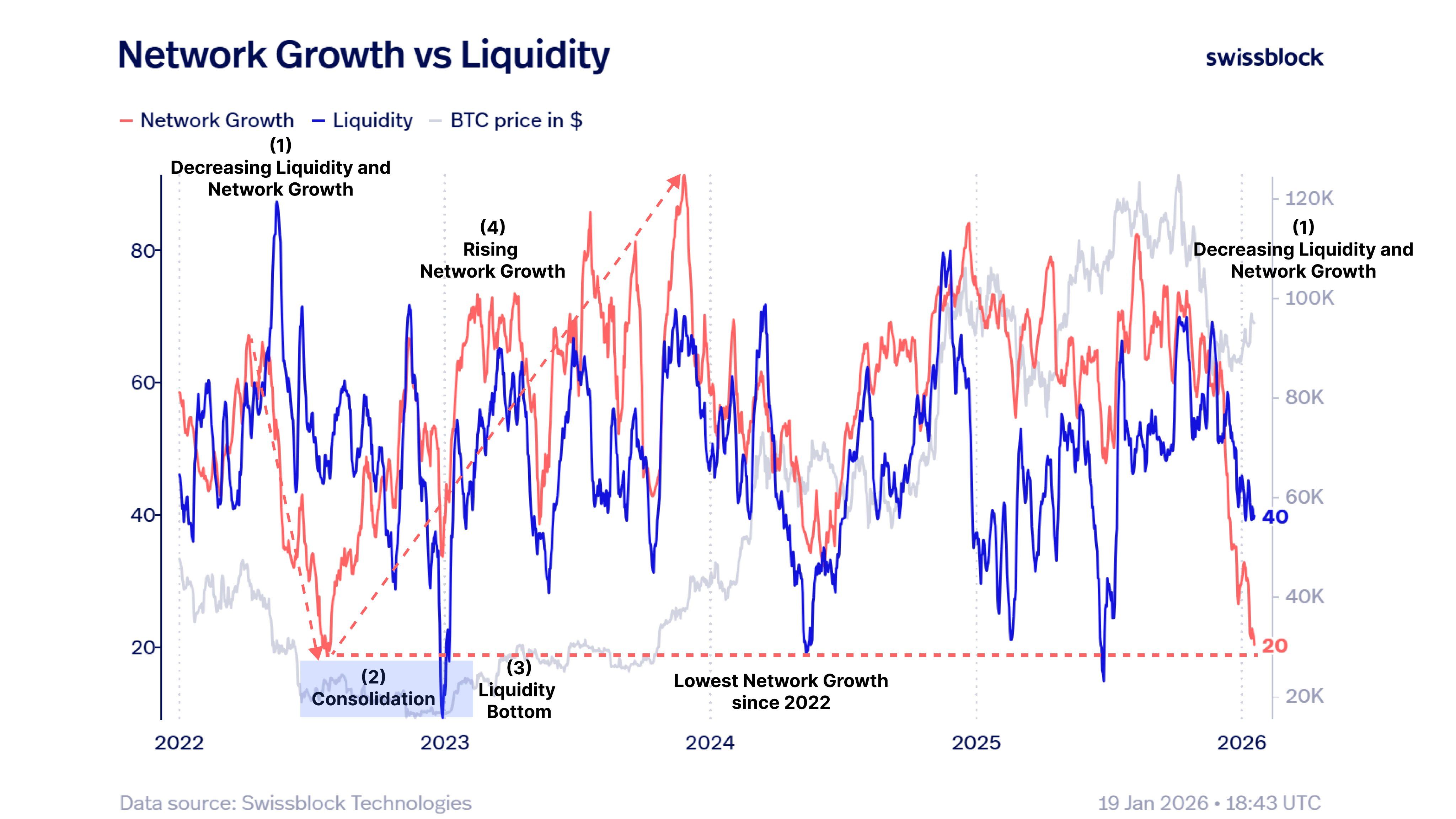
The Swiss bloc says renewed adoption signals are still needed. If this thesis holds, a similar rally to 2022 could push Bitcoin to new all-time highs this year.
Third, exchange data shows that selling pressure from whales has eased significantly over the past month. This shift creates a more supportive environment for price consolidation and recovery.
Sponsored
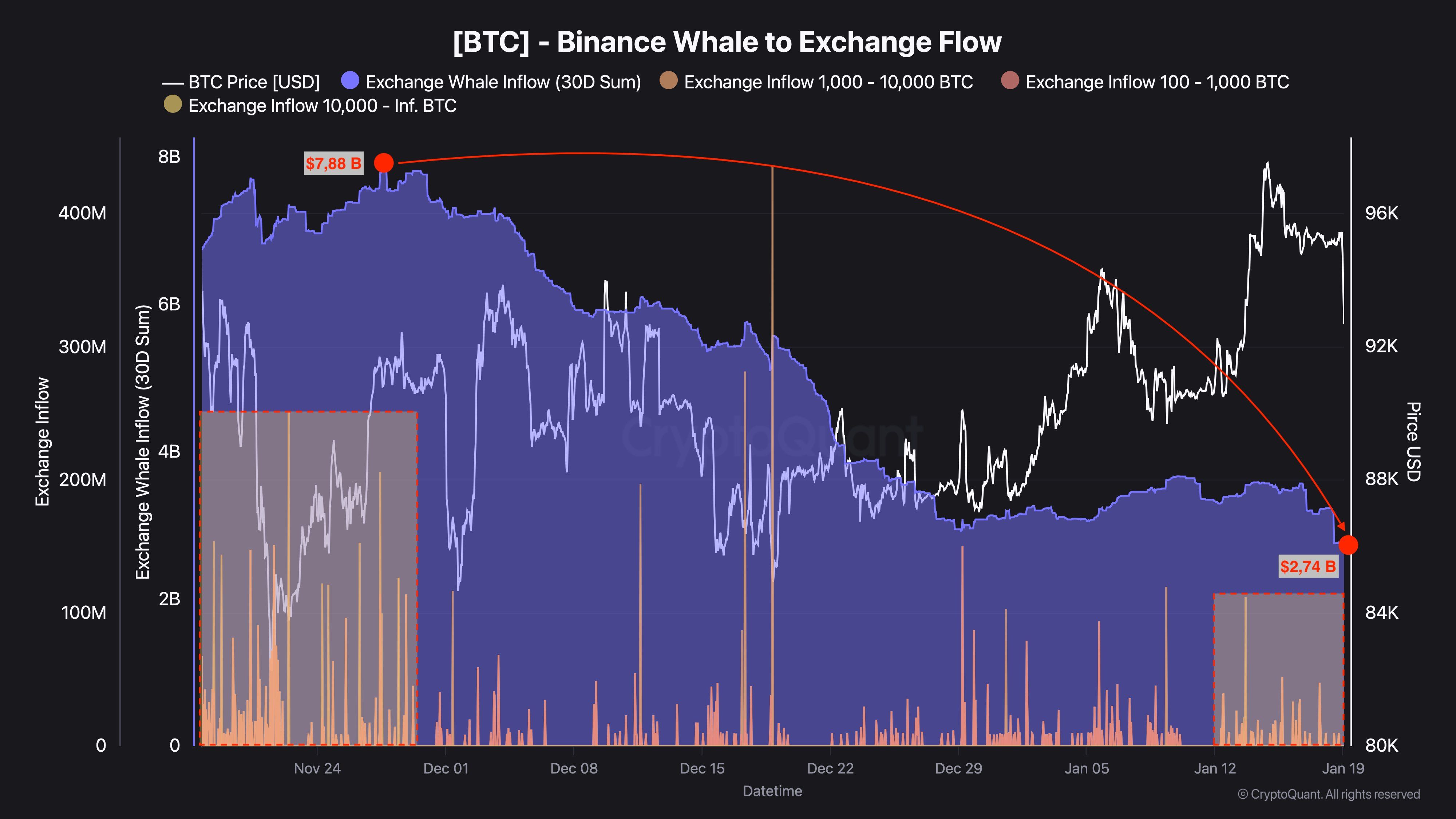
According to CryptoQuant data, BTC flows from Whale to the exchange have decreased significantly, especially on Binance.
In particular, the BTC revenue for large transactions between 100 and 10,000 BTC has dropped to $2.74 billion now, from around $8 billion at the end of November 2025. This change in behavior significantly reduces sell-side supply. It supports price stability and strengthens recovery capacity.
Technical signals (price trading below key moving averages), on-chain data (low network growth) and exchange metrics (whale selloff) suggest that Bitcoin is entering a consolidation phase suitable for establishing a local bottom.
However, the above information is not enough to determine the correct bottom price. In addition, several external uncertainties are unknown. These include the possibility of a return to rate pressures amid geopolitical tensions and the market impact of a change in leadership of the Federal Reserve.