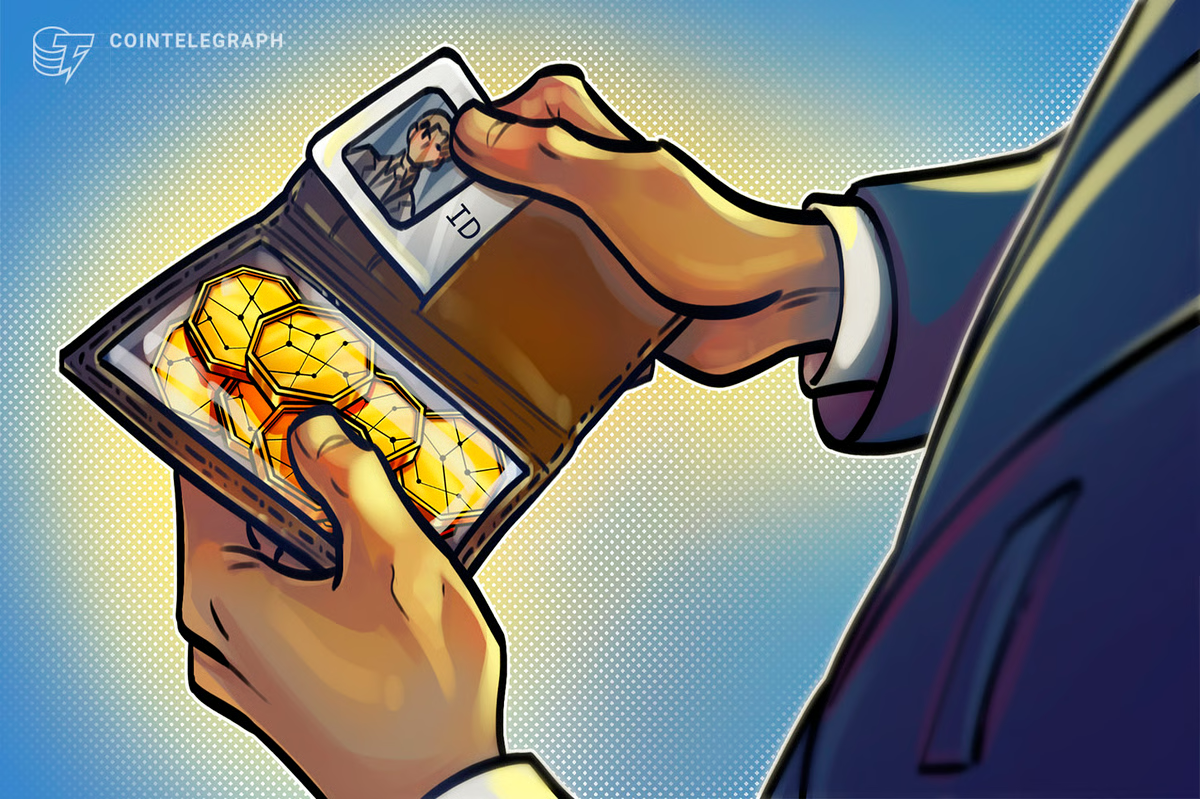
Your Crypto Wallet is your digital passport.
Comment by: Eowyn Chen, CEO of Trust Wallet
The world is changing. Basic things that are often taken for granted in the physical world are becoming one with the dawn of the digital age. Identity, payments and access are now converging into a single place: the digital wallet.
Just as passports unlock physical movement around the world, wallets are becoming gateways to the modern digital world.
Digital wallets now enable access to people's identities, money and services through the online economy and offer true digital freedom to anyone, anywhere.

Across the EU, digital identity regulations are already changing how people verify their identity, how they interact with institutions and how they interact with the physical world. With the digital ID wallet regulation, citizens will soon be able to store national ID, driver's license and health ID on mobile devices.
Wallets as payment gateways
Alongside government-issued IDs, self-managed wallets already support Web3 identity. For example, now the Ethereum name service Web2-style domain for Web3 (like “alice.eth”) can be registered and used by a decentralized application (DApp) browser. This way apps will recognize you without having to share a long wallet address.
This is a clear sign of where things are headed, where a wallet is no longer simply a tool for holding digital assets. The wallet allows users to conduct cross-border transactions securely while maintaining privacy. Things are changing.
Wallets as an identity center
New decentralized identity frameworks are shaping tomorrow's crypto wallets, transforming them into secure and verifiable identity containers.
Instead of relying on centralized systems or third parties, digital credentials can now be stored and managed in user-controlled wallets. These may include government IDs, educational diplomas, and medical records.

The pilot programs will be seen being rolled out in stages around the world via the EU's digital ID wallet, including in Germany, France, the Netherlands and Poland. Citizens will soon be able to verify their identity using verified credentials stored on their mobile devices.
Technologies such as zero-knowledge authentication are being used to verify user characteristics such as age or residency without exposing their personal data. Wallets are becoming the center of digital identity by creating a user-owned identity through secure and order-proofing.
This contrasts with username-password logins and centralized database models such as Night and Day. The decentralized method allows users to authenticate themselves without exposing malicious actors to additional data vaults.
Related: CZ-Owned Trust Wallet Launches Tokenized Stocks and ETFs
The mobile crypto wallet is offering users borderless financial payment tools that support cryptocurrencies, stablecoins and tokenized assets. After reaching 36 million active crypto mobile wallet users by Q4 2024, it is clear that demand for self-managed payments and digital asset management is growing exponentially.
One tangible improvement is Gas Abstract, where users can pay supported network fees with tokens they already own. This will reduce the need for a separate “gas token” and bring payments closer to Web2.
Peer-to-peer transactions, non-volatile token (NFT) marketplace participation and onchain trading – these types of use cases are expanding with ever-increasing demand. Unlike traditional financial systems, crypto wallets do not carry the burdens of excessive fees, delays, or the need for banking infrastructure to interfere with economic activity.
The existing payment methods still remain on the old rails. They struggle with reach, speed and inclusion. Digital wallets do not. Instead, what they offer is a viable solution for users who need the right tools to join the digital age of self-sovereign identity.
Wallets as access passports
In addition to identity and payments, wallets act as layers of authentication to the digital experience. They're used to verify asset ownership, access token-gated communities, and unlock personalized experiences in gaming, events, and commerce.
From unique NFT drops to loyalty rewards systems and play-to-earn game economies, a single wallet can act as an access pass across multiple platforms. These use cases are not theoretical as they now exist across multiple platforms, blockchains and protocols.
What makes this change possible is reciprocity. A single self-sustaining wallet can authenticate hundreds of DApps with a single mobile identity. Authentication now feels familiar through mobile biometric unlocking and browser extensions – your keys never leave your device.

A well-designed wallet connects to hundreds of DApps. People can participate in multiple ecosystems based on a single identity and asset base. Crypto wallets provide a unified mobile solution for digital engagement.
As more services and experiences migrate onchain, wallet authentication is poised to replace traditional login models. This is not just for crypto-native platforms; Transparency is a priority, reducing trust and preserving sovereignty for any digital ecosystem.
Just as physical passports confirm citizenship and enable global mobility, digital wallets are becoming the preferred credential for online identity and mobility. Trust, security, and usability are critical design principles that bind this together and will be the principles that will shape the next billion users.
As decentralized systems continue to evolve, so do wallets. They are no longer simply a tool. They are the foundation of digital freedom.
It won't ask for usernames in the future – it will ask for a signature.
Comment by: Eowyn Chen, CEO of Trust Wallet.
This article is not intended for general information purposes and should not be construed as legal or investment advice. The views, ideas and opinions expressed herein are solely those of the author and do not necessarily represent the views and opinions of Cointelegraph.