ETHZilla Sells $74.5M ETH, Treasury Closes – What Happened?

Journalist
Hassan Shitu

Journalist


Share


Peter Thiel-backed ETHZilla has begun to unravel a strategy that once placed it among the most powerful corporate owners of Ethereum (ETH) by selling $74.5 million worth of ETH and signaling its departure from the pure crypto treasury model.
In a regulatory filing late Friday, the Nasdaq-listed company sold 24,291 ETH at an average price of $3,068, raising about $74.5 million.
The funds are being used to redeem outstanding senior secured convertible notes scheduled for early redemptions on December 24 and December 30.
Following the sale, Etzila's holdings dropped to 69,800 ETH, which is more than $200 million at current prices.
The company said the cash already on the balance sheet will be used to complete redemptions.
Alongside the sale, ETZilla also announced that it will discontinue its modified net asset value, or mNAV, dashboard, which was used to track the relationship between market capitalization and ETH holdings.
Management said future disclosures will focus on balance sheet improvements, revenue growth and cash flow from its real-world asset-token business, reflecting changes in messaging and priorities.

The move comes as Etzila's stock continues to slide. Shares fell 4% on Monday and have fallen 96% from their August highs, leaving the company below the value of the rest of its crypto assets.
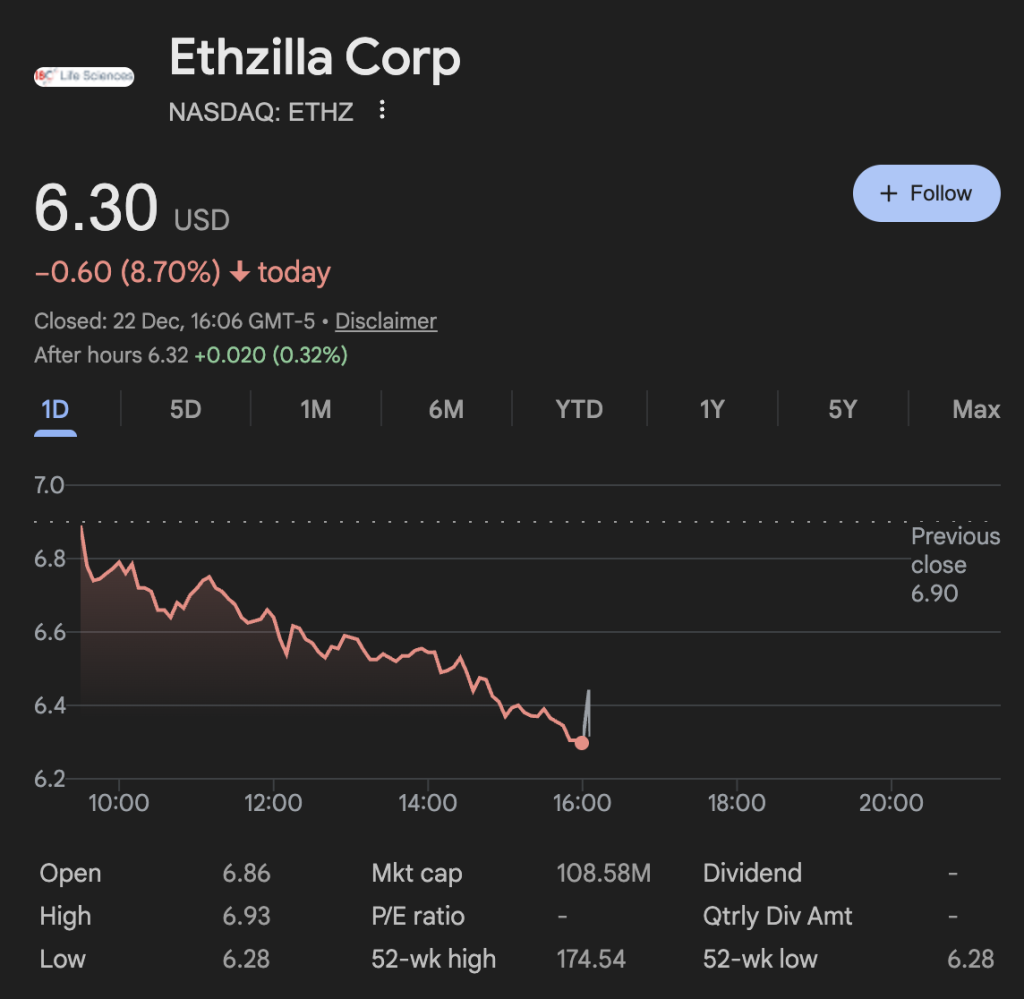
The company started stockpiling at the end of July, but earlier in the fourth quarter, ETHZilla sold another $40 million worth of ETH to fund share buybacks.
However, the stock continues to weaken, now trading below $7 compared to around $20.
ETHZilla is caught on the wrong side of the Ethereum cycle
Etzilla's retreat reflects broader pressure on the digital asset treasury sector. Many public companies that rushed to add crypto to their balance sheets during the summer rally are now trading at a significant discount to their net asset values.
That disconnect limited their ability to raise fresh capital and in some cases forced them to sell crypto to manage loans and cash flow instead of accumulating more.
For ETHZilla, the problem was more about Ethereum itself and more about time and attention. The company built most of its ETH position near market cycle highs.
His biggest purchase came on August 12, when he bought more than 82,000 ETH at an average price of $3,807, making more than $300 million.
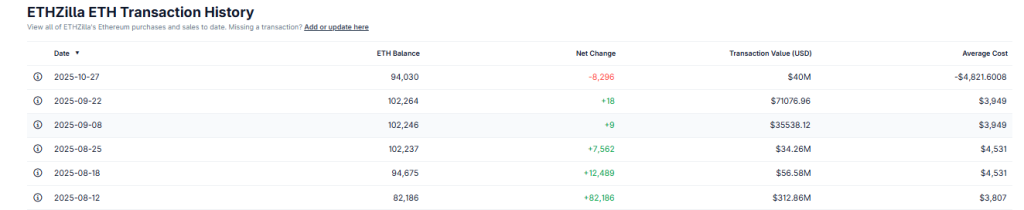
In August, additional purchases were made at higher prices, which pushed the combined cost base above long-term support levels. Smaller purchases in September did little to offset that exposure.
As Ethereum flipped, falling more than 28% to $2,980 in the past three months, the strategy quickly moved underwater.
By the time ETHZilla began trimming its holdings in late October, losses were already tied. The company now faces an unrealized loss related to the accumulated period.
Corporate ETH Holdings Under Pressure As Losses Grow – Who Will Survive?
ETHZilla is not alone, as other major Ethereum cryptocurrencies are also under pressure.
BitMine Immersion Technologies, the largest corporate owner of ETH, is estimated to be sitting on billions of dollars in undisclosed losses, but continues to accumulate and build a business with great focus.
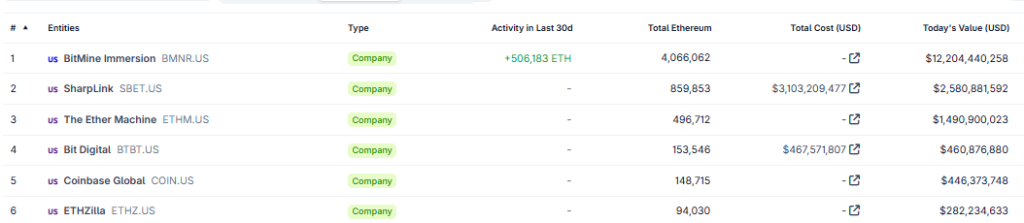
SharpLink Gaming, backed by Ethereum co-founder Joseph Lubin, remains committed to its ETH strategy despite market pressure, and companies such as Fundamental Global, The Ether Machine, and Quantum Solutions hold ETH below the average purchase price.
At the same time, demand for corporate Treasuries has fallen sharply. Data from Bitwise shows that companies bought 370,000 ETH in November, down more than 80% from the August peak.

DiFilam data points to November as the weakest month for digital asset treasury inflows in 2025, with Ether seeing net inflows even as Bitcoin treasuries continue to attract capital.
Trending news, recommended popular crypto topics, price predictions